

Despite the sustained efforts of the UN and its partners, needs are growing faster than aid can be delivered, according to Olga Cherevko, OCHA spokesperson in Gaza.
“We continue to respond, but the needs exceed the speed with which we can respondshe said, highlighting the limited volume of supplies entering the Gaza Strip and a growing list of items that continue to be blocked by Israeli authorities, including heavy machinery, equipment and spare parts needed to repair damaged infrastructure.
Faced with repeated storms that have flooded large areas in recent weeks, humanitarian agencies have prioritized emergency winterization. An estimated 1.3 million people are currently in need of shelter assistance.
“When the storms came, many people lost everything – it took away everything they owned,” Ms Cherevko said.
Tents, tarps and bedding
In recent days, humanitarian teams have distributed around 3,800 tents, more than 4,500 tarpaulins and thousands of bedding, helping some 4,800 families.
The intervention included plastic sheeting, kitchen sets and short-term food aid to help families survive immediately after the floods.
Some of the most flood-prone areas have been identified by local authorities as dangerous, prompting several hundred families to voluntarily relocate. The UN and its partners supported these efforts by preparing and leveling sites and setting up tents to ensure minimum conditions of safety and dignity.
Increased risk of hypothermia
Winter conditions continue to pose serious health risks, particularly for infants. “The risks of hypothermia are increased and babies are in great danger“, warned Ms. Cherevko.
UN partners are also raising awareness among caregivers, including providing advice on body-to-body contact to help keep young children warm.
Beyond shelters, humanitarian operations include food assistance, nutritional screening, health service points and the gradual reopening of learning establishments. In recent days, 13 additional temporary learning spaces have reopenedproviding access to education to around 5,000 children.
However, major constraints persist. Inside Gaza, the number of routes available to deliver aid remains limited, as do the crossing points through which supplies can enter.
Delays at crossing
“There are many cases in which humanitarian cargo is no longer prioritized and priority is given to the commercial sector,” Ms. Cherevko said, noting that this leads to delays that directly affect the speed of aid delivery.
Other challenges include inconsistent opening and loading times at crossing points, restrictions on essential items and registration requirements that prevent non-governmental organizations from bringing supplies into Gaza.
“All these obstacles must be removed,” she stressed. “We have the capacity to respond, but we are limited in a time when people’s needs are growing faster than we can meet them. »
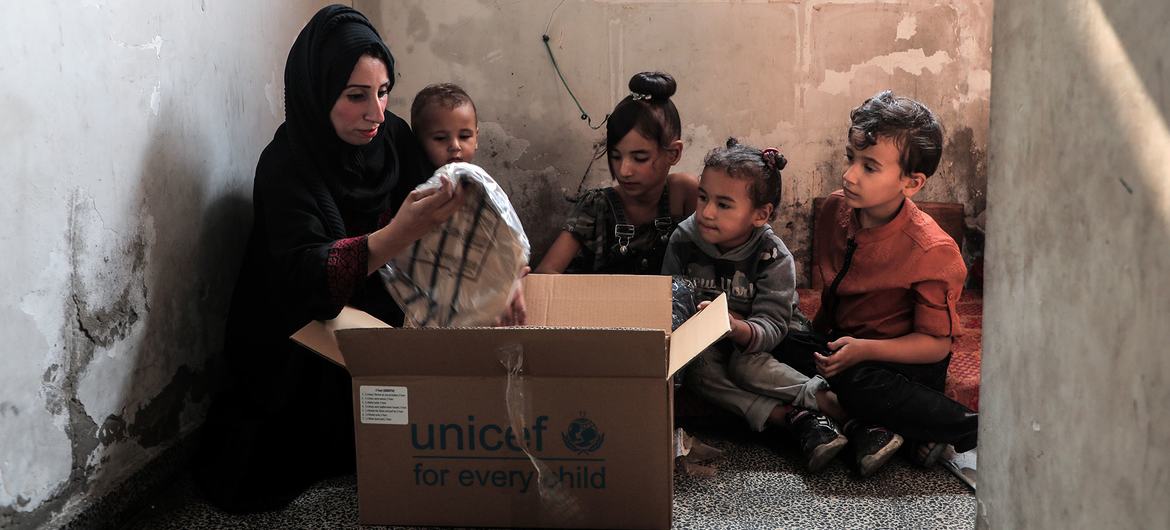
UNICEF is distributing winter clothing kits to children in the Gaza Strip, as winter storms add to families’ hardship.
Publicado anteriormente en Almouwatin.
