

Since Russia’s full-scale invasion in 2022, Ukraine has suffered incessant air raids and drone strikes, disrupting daily life and endangering security.
Ahead of International Migration Day on December 18Elvira explains how art and the quiet power of creativity helped her get through three tumultuous years.
As kyiv bears the weight of war, in the showroom of Crimean Tatar ceramicist Elvira Demerdzhi, her ceramics offer a fragile refuge and reminder of home.
Crimean roots
Elvira’s story begins long before she shapes her first piece of clay. Her mother, pregnant with her, returned to Crimea from Uzbekistan in 1989 as Crimean Tatars returned home after decades of exile.
Her grandmother, deported at the age of nine in 1944, is the only survivor of her family.
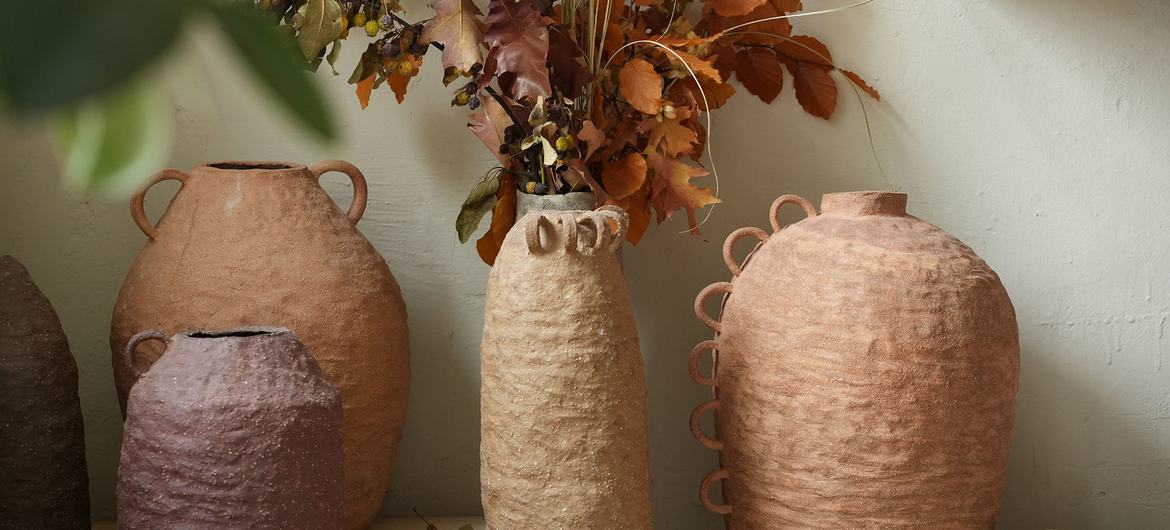
Elvira Demerdzhi produces vessels inspired by traditional Crimean Tatar ceramics.
Elvira’s great-grandfather, who fought against Nazi Germany at the time, was later exiled and reunited with her years later.
The family rebuilt their lives in Crimea, where Elvira grew up, free to roam the southern coast from which she had once been torn away.
Before turning to ceramics, Elvira worked for twelve years as a professional dancer and performer.
Russian annexation of Crimea
After Russia’s annexation of Crimea in 2014, she lost her home and her displacement pushed her toward new forms of expression. Drawn to something more stable, she enrolled in a private ceramics workshop in kyiv and set out to learn everything she could, including how to run a business.
Clay has become both a craft and a form of self-discovery. “When I was displaced after the annexation, I began to study the lands of the Crimean Tatars and realized how little we knew about our homelands. »
For Elvira, each piece is anchored in the places she carries within her, reflecting the landscapes and memories of her childhood and her identity.
His workshop, “Aqyar Ceramics,” is named after the Crimean Tatar city of his hometown, Sevastopol. While traditional Crimean Tatar pottery is known for its colorful floral ornaments, Elvira chose a modern, minimalist approach. She works mainly with stone clay.
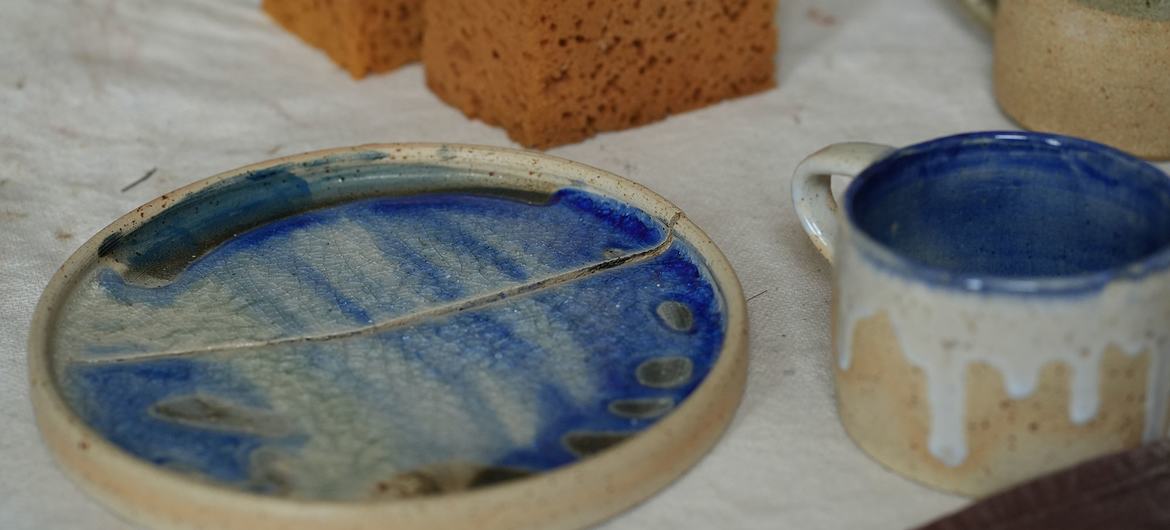
Elvira Demerdzhi sells her work through her brand Aqyar Ceramics.
When Russia invaded Ukraine, Elvira sought temporary refuge in the Netherlands. She could have stayed, but returning to kyiv seemed necessary because it was her home.
In October 2025 alone, Russia launched 269 missiles at Ukraine, the highest number recorded in the first ten months of the year, according to official figures. After such intense bombing periods, sales often drop sharply.
IOM Business Support
“Crafts need stability and, for now, I can only dream of having that for my business,” said Elvira.
Even so, some days bring small signs of progress.
Military families attend his master classes, appreciating the concentration and calm that clay requires. Customers are looking for meaningful gifts. Restaurants and hotels place orders for handmade tableware.
This year, Elvira received a business grant from International Organization for Migration (IOM), which allowed him to purchase additional equipment and materials. With the grandmother, she was able to collaborate with other ceramicists and take on large orders.
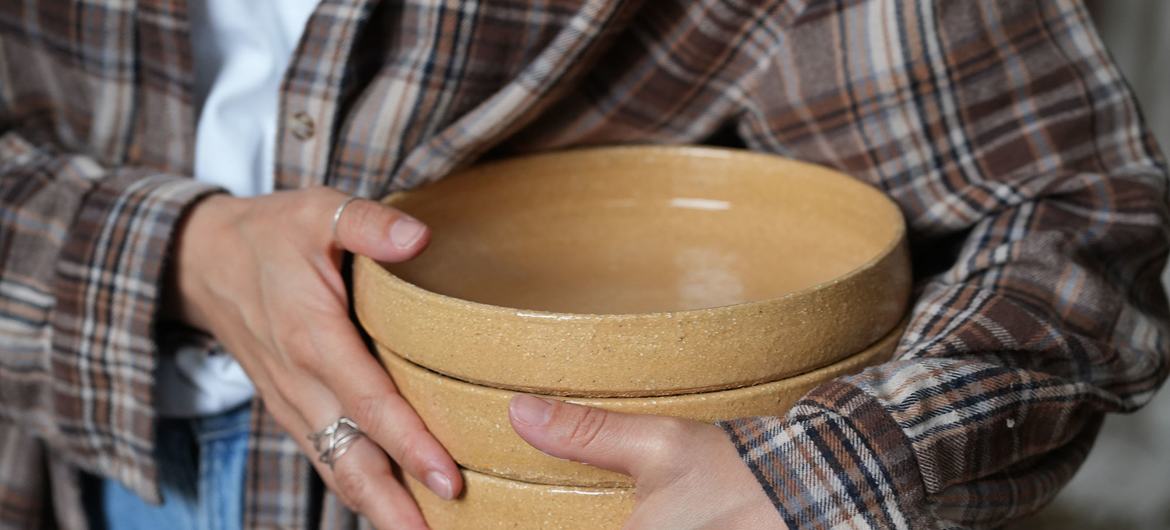
Elvira Demerdzhi offers dishes that reflect her Crimean Tatar roots.
Between 2022 and 2025, IOM helped more than 1,800 Ukrainian micro and small businesses stay afloat despite the pressures of a war economy.
Rebuilding her business is only part of Elvira’s life. She is also raising her six-year-old son, hoping to pass on their Crimean Tatar heritage when he is ready.
“He knows where he comes from, but I want to protect him a little longer,” she said.
Publicado anteriormente en Almouwatin.
